Showing posts with label column. Show all posts

Tuesday, February 10, 2015

New academic year Blues

School’s reopen next week, and it is not just the parents who should be tense

The long winter break of the children are about to end now. Most of the schools, including Government schools, will reopen on 16 February for a new academic session. Like every year, it’s time again for parents to prepare for the several new challenges owing to their children’s education. It is obvious that the month of February is a tight-budget-month for every parent. Almost all private schools have revised the tuition fee and some schools have announced changes of school uniforms and the like. Parents working with middle-class budgets will be directly affected by this.

Friday, January 16, 2015

Status: Unemployed

“Kay chaina, ek din regular huncha hola ni,” is what an elderly relative once said on learning that I work with a local newspaper. And that pretty much sums up what employment has come to mean in our state. The prized and ever elusive “regular” “government” job is employment and everything else is...err...coca cola, campa cola, coco cola? You choose.
The struggle to get a regular job is something every soul here understands, and sympathy, coupled with never-say-die encouragements, flow freely. A friend once related an incident about this time she had gone to renew her unemployment card at the concerned office.

Monday, January 12, 2015

Caves for rent in the urban jungle!

It is a fact that urban areas, with their substantially more employment opportunities, choice of schools and colleges, better medical facilities, easier access to administrative centres etc., attract a high number of migrants from the rural parts of the State. While the aspiration to live in the “city” must have always been there, the past few decades, when “development” and disposable incomes spread comparatively wider in Sikkim, and also when more opportunities opened up, have seen an explosion in the number of people settling in Gangtok. Sample this, the Gangtok Municipal Corporation area is estimated to have a population of nearly 2 lakh, that is close to 30% of Sikkim’s population of a little over 6 lakh. [accompanying video at the end of the column provides a virtual walk through a sample tenement which sees no natural light even during daytime]

Wednesday, January 7, 2015

Need to discuss ideology more than personalities in Sikkim Politics

Sikkim joined the world’s largest democracy nearly four decades ago, but political engagement here is clearly yet to mature to a level where political thought and ideology become talking points among the lay citizens. The real aspirations of the young and the expectations of the masses are still addressed piecemeal and offered mostly short-term solutions; political debate remains limited to leader/ party-affiliated stands and does not engage at an ideological level. Politics in Sikkim, everyone will agree, is not influenced by political thought or theory, and is instead dictated by situational and personal exigencies. Poll performances and political relevance continue to be decided by personalities and not ideology. This is unfortunate because while individual brilliance is necessary for a politician, for politics to mature, the political space requires ideology-driven discussions and positions, not priorities dictated by personality cults. We, in Sikkim, are lagging behind in evolution of clear political concepts.

Tuesday, January 6, 2015

A New Year begins! Yay! Yay?

So you partied, got sloshed, stoned, hung over and inside out to usher in the new year and thanks to you the new year has made itself very comfortable here. Yes, so comfortable that it hardly feels like a new year! It feels like we’ve known each other for ages! [It already knows that people have to work for a living and that traffic jams make this town come to life. Grrrr!]. On New Year’s Eve begins the tale of everlasting hope when one casts off all negative experiences of the past year and hopes to carry forward all the positive ones to the coming year. Or so you would like to think. In reality, this is how every New Year rolls...

Children & the City

As usual, the enormously long winter break of the children is upon us. Some of the parents residing in urban clusters have sent the children off to their native villages to enjoy the vacations. But not everyone enjoys the luxury of having a home in the basti as well, and those who are not as lucky see their children cramped for space. Rented quarters and concrete jumbles make enormous demands on the creativity of children [and their parents] to find place to play.
Most of such children can be seen either playing marbles in the corners or playing cricket on the streets – at least on stretches such as ICAR-Lingding, Byepass-Ranka, Ranipool-Adampool roads where traffic is low and vehicles in less of a dangerously tearing hurry [thanks to the poor condition of the roads]. Kids who don’t have too many children of their own age in the neighbourhood can be seen either playing alone [as seen the picture] or spending all their waking hours watching cartoons on TV. The travails of living in the city never end!

Saturday, September 13, 2014

'GOD ON THE EDGE'

The unlikely duo of a mahut and a film maker launch a crusade for the conservation of elephant habitat and against speeding trains that have killed 70 elephants in West Bengal since 1974.
Birendra Shandilya
Though worlds apart, the undying love for elephants and the passion to protect them has brought 60-year-old Mohammed Jaan Baksh, a mahut (elephant keeper) from North Bengal and Ashok Patel, a 36-year-old film maker from Mumbai, together.
Patel who went to school at St Joseph’s, Darjeeling had always cherished to become a film maker while his parents insisted that he take up a regular job. After completing his schooling and college at Bangalore, Patel tried a stint at business in Delhi.
Not having made much headway Patel made up his mind to follow his dreams and left for Mumbai. In Mumbai he started with editing films. However 23 September, 2010 changed Patel’s life completely.
On that night at around 11:30 pm, 3 elephant calves, 3 females and a tusker were mowed by a speeding train on the Dooars track in North Bengal. A lactating mother was dragged around 300m on the tracks before the train came to a halt.
“The news of the death of 7 elephants on the night of September 23, 2010 shook me to the core. It is then I decided that I should do something about it” stated Patel.
In 1961 the then Maharaja of Coochbehar in North Bengal was in search of a Mahut to send an elephant to Balurghat ( Baksh’s home town in North Bengal.) 11-year-old Baksh managed to secure the job. Thus began his tryst with Shivprasad- the Elephant. Shivprasad was later put down for killing a man despite Baksh’s plea that the elephant was completely normal.
With Baksh’s 23-year-old tryst coming to an end, he resigned from his post and returned to tilling his fields.
However the Mahut in him won and Baksh returned to Jaldapara Wildlife Sanctuary, Jalpaiguri talking up the job of training elephants and Mahuts.  Baksh has trained more than 50 elephants and double the number of mahuts. At present Baksh looks after Urvasi- a female elephant.
Together Patel and Baksh have been crusading  for the conservation of elephant habitat along with  stopping  trains from plying at night on the killer Dooars railway line. The speeding trains are responsible for hundreds of elephant deaths. As part of this crusade they  have created “God on the Edge” a highly acclaimed docudrama.
“The natural habitat of elephants has been fragmented by human settlements, railway tracks and roads. Numerous elephants die on these killer tracks every year while moving through their age old corridors” stated Patel.
According to  Government figures around 70 elephants have died in the State by speeding trains since 1974. Out of these, 67 alone are in North Bengal.
Having spent his childhood in North Bengal; having gone to St. Joseph’s, North Point, Darjeeling and his  father being in the Indian Forest Service cadre in North Bengal, Patel has been closely connected with nature and wildlife.
“Baksh is truly sad with the state of affairs. He hates the speeding killer trains and has been crusading for slowing down the speed of the trains to 25km/hour; hooting frequently when passing through elephant country ( as elephants have sharp ears though poor eye sight) and stopping night trains” added Patel. Statistics show that 78% elephant deaths on the tracks have occurred between 6pm to 6am.
“The documentary has won many an accolade and has been widely screened. However my  biggest achievement will be if the public are sensitized and the authorities stop the killer train services at night” stated Patel.
“ I want to continue making documentaries on wildlife and nature but the problem is finance”, he adds.
Box
“GOD ON THE EDGE”
•         Best film on environment at the 10th IDPA (Indian Documentary Producer's Association) Excellence Award,  Mumbai.
•         Official selection (in competition) at the 'Wildlife Conservation Film Festival, New York,  2015.
•         Official selection (in competition) at the 6th Nashik International Film Festival,  2014, Nashik, India.
•         Official selection at the 13th Apala Paryavaran Film Festival, 2014, Mumbai. Organized by Paryavaran Dakshta Manch in association with the Ministry of Environment, Govt. of Maharashtra.
•         Screening hosted by WWF India, at India International Center, on the 26th of July, 2014, New Delhi.
•         It was premiered by NCPA (National Center For Performing Arts) in association with IDPA on 28th of February 2014, under the section 'Reality Check', at NCPA Little Theater, Nariman Point, Mumbai.
•         The Bombay Natural History Society (BNHS) hosted a screening of the film for their members and the general public on the 10th of April, 2014, in Hornbill House, Kala Ghoda,  Mumbai.
•         A screening was hosted by Bombay Veterinary College, Mumbai, on 29th of April, 2014.
•         A Screening hosted by Wildlife Trust of India, Noida, on 25th July, 2014.
•         Screened in Guwahati, Jalpaiguri, Siliguri, Darjeeling, Kolkata and Bangalore.


Friday, November 8, 2013

Remembering Arun Kumar Pradhan KC PRADHAN

In the passing away of Arun Kumar Pradhan, Sikkim lost one the stalwarts of its bureaucracy. Like a few others, he saw the changes in Sikkim’s history and destiny from very close quarters. At a time when Sunanda Datta-Ray thought it fit to bring out a revised edition of his book on Sikkim [Smash and Grab in Sikkim] after a lapse of 30 years, old memories are being resurrected. His story is one of him and the Jungkhyang-the Chogyal P.T. Namgyal. Besides what he did capture stunningly, there are still many untold stories among old stalwarts who saw history in the making. Arun Kumar was one of them.
He used to narrate his own version, being the scion of pioneer politician Gobardhan Pradhan of Praja Sammelan based at Temi-Tarku with his comrade-in-arms and equally politically inspired Dhan Bahadur Tewari as the joint leader. Kazi Lhendup Dorjee was then a young handsome lad assigned as an Agent to source vegetables to supply to the British troops during the War. His frequent sojourn was Tarku- the Mecca of vegetable growing in Sikkim, with Dhan Bahadur Tewari as the fountain head. Kazi Dorjee later formed his own political party, Praja Mandal, at Chakung. These again with that of Praja Sudharak Samaj led by Tashi Tsering brought about Sikkim State Congress in December 1947. This instinct and having seen the largest Library of books – Manokamna Library - in Sikkim in those hoary days with books coming from various Embassies and High Commissions in loads, so large enough beyond the capability of lone Dakwalla to carry from Singtam – the nearest Post Office, inculcated in Arun Kumar many varied values in life that is truly Sikkimese. Gobardhan Pradhan was one man who used to advocate that Sikkimese of diverse communities, especially the Nepalese and the Bhutias, should live in harmony and was great advocate of mixed marriages. During my stay in Temi as young Forest Officer he used to discuss the issue at great lengths, including designing of dresses which truly amalgamate the communities. It sounded queer to me then, but as I reflect back, I realize how farsighted man he was to bring about a sense of belonging in his own simple ways. Truly he was ahead of our times.
We failed to capture the rich knowledge and experience of Arun Pradhan when he was alive. Likewise there are rich experience and anecdotes among such stalwarts stilling living with us. It will be a tragedy if all these storehouses of knowledge go down in history unknown and unrecorded. The era of fear is over. We are proud to be part of a great vibrant nation with opportunities all round. But it will be matter of shame if the generations yet to come miss all sides of the stories and end up making their own assumptions and have to gulp the history of Sikkim written by some obscure historian alien to Sikkim.
Adieu, Kaka Arun, we miss you as you were the beacon of hope in our community and you were the brainchild of annual Indrajatra Festival at Gangtok with a view to bring the members of the community together to a common venue at least once a year and showcase our rich cultural heritage The community is proud of your farsightedness.
We pray to the Almighty that your soul rest in peace.

Saturday, November 2, 2013

With recognition, comes responsibility KC PRADHAN

With Lonely Planet recognizing Sikkim as the world’s best destination as far as regional tourism is concerned for the year 2014and laying special emphasis on natural beauty and cultural riches with the theme: Sikkim- Green is the Colour, the Government has got full marks in this sector and if the tempo continues with further refinement, this engine of economic growth is bound to put Sikkim on a higher plane. The people of Sikkim should applaud the Government and all the stakeholders in the travel trade for this excellent, and rather unexpected, recognition which has made Sikkim and the country as a whole proud.
However, this recognition has thrown a lot of responsibility on the Government and stakeholders. As the saying goes, ‘heavy lies the head that wears the Crown”. Lonely Planet is the Bible for the average foreign traveler and once the name of places of interest and accommodation which they think is value for money are indicated, the visitors seek out the destination with high expectations. Visitors start planning their vacations a good six months to one year ahead. Hence, the visitors that plan to visit Sikkim in the year 2014 might be overwhelming. This requires pulling up our socks and getting prepared to receive the visitors who will come with very high expectations. This entails up gradation of our tourism infrastructures on a war footing. It is time for the concerned department to chalk out a calendar of events and publicize it in a manner befitting the recognition with due assistance of the Ministry of Tourism and the External Affairs at the Centre.
All our Embassies should be provided with appropriate literature with request for wide publicity. Also, an imaginative website with correct information should be launched with translations in all major languages. All the websites on Sikkim Tourism are filled with high superlatives and visitors usually get something else when they actually land here. Approach should be to impart correct information. Rating like good, moderate, not recommended should be adopted.  
Our road connectivity has to be improved in earnest. Telecommunication in far flung tourist destinations like Lachen and Lachung besides Dzongri must be ensured and maintained for which the Dept of IT should be put on the job. The traffic congestion in Gangtok has to be tackled, perhaps on the lines suggested to the Government by the Traffic De-congestion Sub-Committee constituted by the Sikkim Senior Citizens’ Society as immediate remedial measures. The possibility of bringing the dateline of commissioning of Pakyong Airport closer could be given a thought. Some additional helicopters with higher passenger load could be worked out even if it has to be chartered from private organizations in case of increased demands. Trial landing of helicopters at Dzongri with a helipad well positioned would go a long way in building a sense of security among the visitors.
Every hotel and home-stay should be inspected by competent teams with a view to upgrade the facilities and kept under close watch as regards the hygiene, cleanliness and various food ingredients they use considering that at most tourist destinations in the country, the stakeholders are out to make a fast buck at the expense of the health of the visitors. Beautification of roads, highways, homes, etc. should be launched in the right earnest. All the tourist vehicles should be in proper condition and the drivers given crash courses on proper etiquettes. The owner driven vehicles should be given due prominence and encouraged. Tourism police as conceived as early as in 1989, preferably with ladies, should be put in place in all tourist destinations with all round patrolling for visitors’ safety and assistance. Government must work in tandem with the TAAS, SAATO, Sikkim Hotels & Restaurant Association, various cultural groups etc. and all assistance extended with funds sourced from DoNER or NEC or Ministry of Tourism as a special case. The recognition is not only for the state but the country as a whole and Sikkim could well lead the way for the other states to follow.
The oft repeated complaint of entrepreneurs who are in travel trade is that they are hobbled with bureaucratic hassles and the huge amount of paper work required  for various taxes and levies. This sort of thing does not suit the temperament of the Sikkim people. All these rules should be monitored by one single agency and the best way is to calculate a combined annual fee or tax and let them get relieved of all the hassles. Getting good hands to work in the hotel business is another complaint. Sikkimese people don’t like to take up such jobs within the state considering it beyond their dignity whereas outside the state they merrily plunge into it. This dilemma is strange but true and has to be solved.
There are a number of organizations initiated by our local young energetic groups like Sikkim Ornithological Society, Sikkim Anglers’ Society, Cultural groups etc, who can contribute substantially in enhancing tourism in the state. They are languishing for lack of financial assistance and patronage by the Government. Some grant-in-aid on an annual basis could go a long way. Bird watchers are high spenders, only next to Golfer, and SOS deserves all encouragement including relaxation in entry to protected areas. To open the park only at 8 am when the birds wake up at 5 in the morning are some of the issues that need to be addressed. Personnel who man the institutions must understand the point of view of enthusiasts instead of sticking to a set of rules made somewhere by unimaginative and disinterested people. Some brainstorming sessions to overcome all these hassles are the need of the hour. Perhaps, in the given scenario, the Chief Minister known for his decisiveness is truly the only answer.
Even though 2014 is an election year, the people of Sikkim should give equal importance to this unique opportunity to take a quantum leap in the field with determination and confidence. Once you reach the top you should be able to hold on and step further to still higher plane as sliding down though easy will be painful. Just a thought at this moment of glory of the institution where many hands have joined together in the years gone by ever since Tourism was conceived and launched with meager resources and the foundation laid is still there for all to see.

Thursday, October 24, 2013

Sikkim’s read for a Bandslam YESHI LHAMU

Column:-
New bands have been forming with welcome frequency of late in Sikkim. Be it an all girl band or an all boy band, forming bands has definitely gained a lot of popularity in our State. It’s a good thing too seeing and observing the youth especially because they are getting to do what they love! They gradually gain some amount of confidence and with it develop a sense of responsibility.
We know not whether we are to say that our Sikkimese youth have been influenced or inspired by the Korean pop culture (k-pop) or by the Nepal pop bands that have been doing extremely well in this profession. Still this is definitely a good effort being put up by the Sikkimese youth. Appreciated!!
I accordingly came across one such band formed by our own people named “Verbalize” through the famous social networking site that is Facebook. When I happened to listen to their debut titled “Something about Us”, I began developing interest in the group and so decided to get in touch.
Verbalize was formed by two boys - Nipendra Singh and Roshan Chettri - early last year. They came up with this idea of recording a song because they wanted to come together and do what they love- that is to make music. They said they were kind of inspired and encouraged by the fact of how well the Sikkim originated band “Girish and the Chronicles” were doing despite the instability of this profession. They have until now negotiated with OMAS, have performed at NH 31A and are looking forward to reach out to a larger audience in the coming future.
Nipendra says, “Even though we don’t have much support compared to others but we hope to make it big one day”.
This discussion, or an interview if you would rather call it that, made us think about the idea of the battle of the bands in Sikkim. It would be very interesting to have a battle of bands - a “Bandslam” - in Sikkim. Considering, the enthusiasm which has been seen over the years, especially among the teenagers! And now that we think even the organisation which takes the initiative to organize it would earn a good profit if we are to think financially as, the return would definitely be good as never has such a thing been organised in Sikkim.  
If this was to take place I think the confidence of the teenagers would definitely be on high and those who plan to pursue their career in this field would definitely emerge more confident. Whether they win or not would be a secondary but simply the platform provided would be made best use of.
Therefore even though this is no less than a fantasy but let’s hope and look forward to encountering a program as such and if we are to observe then it seems to me that it won’t be long before some organisation takes the opportunity to organise one such program or a competition in Sikkim very soon. Bandslam according to us will be declared very soon!!
Our best wishes to all the upcoming bands like Verbalize, Genesis of pink, Still waters, Sagar Pradhan who is a rapper and many others who are yet to come in the spotlight. Meanwhile, Verbalize has invited readers to find them on facebook and check out their work…
[the writer is a class XII student in a Gangtok school]

Wednesday, October 9, 2013

What if Politics became only about looks…

column-
YESHI LHAMU
We have in the past discussed many opinionated issues be it about looking at the positive side of our life or about the sexual abuse of girls or the idea of secularism. This time, I think we owe it to ourselves to lighten up a bit and take up an humorous idea.
What if we were to imagine the political scenario of India if being elected or voted as a political leader was all about the way one looked, and what if voters started voting not by looking at the ability, contribution or efficiency of a leader but by judging the candidate on looks! Politics would have been rather interesting, at least very good looking. Don’t you think?
Then, Rahul Gandhi, the vice president of the Indian National Congress, would be the leading political leader whether he is any good as a politician or not. We say that Rahul Gandhi has definitely been able to make his mark as a handsome politician!! Even in his 40s he looks dashing, handsome and decent whether it is because of the way he has been brought up or because of his mother’s Italian roots. But he is certainly a well groomed man and definitely a person with style. He manages to look undoubtedly handsome even in the staid white ensemble (kurta). In Rahul’s case, he wears the kurta and doesn’t allow the kurta to wear him.
Even I had a glimpse of Mr. Gandhi when he came to Sikkim for a visit during the last elections. (He was wearing a Lepcha dress and was clearly rocking the Lepcha dress too). It was then that I realized who he was and knew that the fanfare was justified  A majority of women in the crowd were aged 20 to 40 or so. An aunt literally fainted near the Tourism office when Mr. Gandhi happened to stop his car and wave around. I was astonished and taken aback at that point of time by the way the women were acting. It to me seemed like as if the Beatles or the Directioners (One Direction) were there.  We know that Rahul Gandhi is “the one” among women and girls from all age groups.
Also he is popular among the youth because the kind of concept we have is that, as he is young compared to other politicians so he definitely understands us and will surely make an effort to empower the youth of the nation. But Congress basically, though being the oldest party to exist since independence and before too has not been able to make its mark as much as they could. If we are to compare the existence of the Indian National Congress in the country with that of the existence of the Sikkim Democratic Front in Sikkim we can clearly see that the SDF party led by our honorable Chief Minister Dr. Pawan Chamling who is also the party’s president has been able to make his mark beautifully.
So now, let us not drift away from the topic rather stick to it. It’s a good thing that in India particularly we are able to vote only after we reach the age of 18 because if we were allowed to vote earlier then majority of girls would vote for Rahul Gandhi definitely without us really understanding the game of politics. Not only girls but I still have my aunt who is in the age of 45. She’s still got a crush on Rahul Gandhi. When Rahul Gandhi is on TV she can even sacrifice her TV serials, not to hear Rahul speaking but rather to see him just being on screen. It is indeed fun thought if we are to think that politics was all about ones looks and ones attire. Would we then get presentable and rightly dressed national leaders? And if that was the case then Narendra  Modi would not have much charm Rahul would at least prove to be a strong contender!

Monday, September 30, 2013

“I want Sikkimese people to Rule the World”

CM Speaks:-
Intro: Chief Minister Pawan Chamling inaugurated the Maghey Sankranti festival at Jorethang on 14 January, 2013. The address of the Chief Minister is given below:
People from Sikkim and other places have gathered here today. I welcome all of them. The newly elected representatives are also present here. I want to congratulate them on behalf of the Government and the party. I also take this opportunity to congratulate all the party-workers, MLAs, Ministers and well-wishers who worked relentlessly for the Panchayat election. It is because of your hard work that SDF Party won 95 percent seats in the Panchayat election. The remaining five seats were also more or less won by SDF. SDF won almost 99 percent of the seats.
This Panchayat election has been a historical one as fifty percent of the eats were reserved for women. No other State in the country has such a system. I congratulate all the elected women candidates. The reservation is a result of the principle of social justice that SDF Party is committed to. I request everyone to understand the principles and philosophy of the SDF Party.
Two women have been elected as Zilla Upadhyakshas this time. Please use your position to work for the welfare of the people of Sikkim. Zilla Panchayat members, Gram Panchayta members should work in coordination with each other. Everybody must go through the Panchayat manifesto. People must tell the Panchayats about the promises made in the manifesto and their fulfilment. This is the 21stcentury. People will not listen to you just because you are a Panchayat, MLA or an Officer. SDF Party has made people conscious and aware. You must visit the villages, assess the needs and demands of the people and accordingly make recommendation to theGovernment. Panchayats must recommend work that will make the people productive. Demands and schemes will not be taken up unless recommended by the Panchayat. I will meet only those who come with recommendation of the Panchayat. This will help us to identify which work is genuine. There is a huge demand for protective work. But the work has not been sanctioned in places where there is genuine need. We must help those who are in need.
The Panchayats must keep an eye on all the work being done in their areas to ensure that the quality of work is not compromised.  Sikkim Government is responsible for only the supply of LPG cylinders through STCS. We are not responsible for companies that have taken the franchise for distribution of LPG cylinders. We must investigate if these agencies indulge in discrepancies.
We have done a lot for the people. No other place has a Government which is so concerned about the people. Panchayats must do the work of the people and also take responsibility of the party. They must work in consultation with the people. You must see for yourself what Sikkim was and what it has become. You must accept the truth. We have to give development and benefits to the people before anything else. Sikkim is doing well. SDF Party has removed famine from Sikkim. We started free distribution of school uniforms and text-books. We have opened colleges and universities throughout the State. We have started sending our youth for IAS coaching to Delhi so that the children of the poor get equal opportunities. We sent 140youth in 2012. Parents should not tell their children to look for jobs on Ad hoc or Muster Roll. Our children are not born only to work on Ad hoc and Muster Roll. Our children must not undermine their abilities.
To be successful, these three things are necessary:
1. Proper utilisation of time.
2. Knowing one’s strengths and putting it to good use.
3. Focusing on what one wants to do.
A person can be successful if s/he implements these three things. The youth of Sikkim should spend their energies to be successful. We will always help you. We will send youth who are interested in NDA coaching. We have a Gurkha as a Lieutenant General. We will start sending youth for coaching in banking services too. We will soon have Sikkim Scouts Battalion. Fourteen hundred youth will get jobs.  The qualification would be class ten pass. If our youth want to be recruited, they should start exercising.
I am a person who wants to take Sikkim on the path of peace, security and success. It is difficult to walk on the good path but it is effortless to disrupt the path. It is easy to mislead and lie to people. Human civilisation has evolved from a wandering tendency to the agricultural age. The transition from agricultural age to the industrial age took place almost one thousand years ago but when we formed the Government, Sikkim was still in the agricultural age.  We took three giant leaps in agriculture, industries and service sectors. The Industrial age started from Europe. Service sector also started from there. Tourism also started from Europe. Italy was the first country to start tourism. But today the world has reached an age of innovative knowledge based industry. It has been only 10-15 years that we started tourism in Sikkim. People are yet to understand certain things.Our youth also think that they should get a job right after they finish their studies. But such perceptions do not work in today’s world.
Development has taken place in agriculture, service sector and industrial sector. Today, private sectors offer better salaries than Government jobs. People are competitive. Private sector has hire and fire policy. We must accept the truth. We have a lot of opportunities but we have not been able to make proper use of these opportunities. We have opened a Pharmacy College. The youth must explore all options.
Sikkim has peace and security. We need to keep it intact. We must not discriminate against anyone as far as development is concerned. You must not listen to people who oppose pro-Sikkim work that we do. They are anti-people.
They have raised the issue that Sikkim Subject was not asked for while issuing Aadhar cards. We have given protection to all the communities in the last 19 years. All Nepalis have been given OBC status. Bhutia-Lepcha seat has been protected. People must understand the truth. I am a leader who is your well-wisher. I will never betray the people. The Constitution safeguards Sikkim Subject.  There were more than 200 Central Acts enforced in Sikkim before we came to power. Direct tax had also been implemented in Sikkim.We are always honest.
Some people are spreading the rumour that the Registration of Companies Act will be nullified. But this Act is yet to be tabled inRajya Sabha. We are talking to legal experts on the issue. We have written to the Central Government saying that we do not require the Act. We want to make the people knowledgeable and capable.
Two Sikkimese heroes have become martyrs. We will name a school and a road after them. We will announce a scholarship in their memory and also make their statues. We are giving pension to unmarried women above 45 years of age. We will also sponsor children who are born in the third gender. We will give an allowance of Rs. 5000 for institutional deliveries. Taxi drivers should not charge excessive fares. This will hamper the image of Sikkim. Drivers should be appointed only after they take training under capacity building.
Ninety-six percent of the hotels in the State have been given on lease. Our people should get into hotel industry. To work for al livelihood is the mindset of a developed society. There is no dearth of jobs in Sikkim.
Health is the most invaluable asset of man. Man needs peace and a life of honour. We have guaranteed these things since the last eighteen years.
We enjoy a good image everywhere. We recently bagged the CNN IBN Diamond State Award. Sikkim was adjudged as the best State in the Small States category.
Sikkim is yours, Sikkim is ours. We all must have a sense of belonging. FDI has entered India but we will not allow FDI to come into Sikkim. We have started Co-operative Societies and they can take up work up to Rs. 3 crore. We will increase this limit to 10- 20 croreonce our people are adept. But the Co-operative Societies must notsell the work to others. We will make Development Committees at the Panchayat and ward levels. Panchayats must take full responsibilities and work.
I thank everyone who made this Maghey Mela successful. We feel encouraged when our good work is assessed.
I extend my heartiest greetings to everyone and I hope 2013 will be prosperous and progressive for Sikkim. I also wish everyone a very happy Maghey Sankranti.
Thank you.

Monday, September 23, 2013

The practice of Humanity is above all

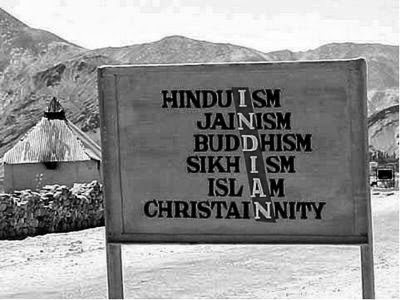
To quote His Holiness the Dalai Lama, “Religion may have become synonymous with deep philosophical issues, but it is love and compassion that lie at the heart of all religion”.
Even after so many years of advancement and even though we are living in the 21st Century, we have failed to accept the idea of secularism and around us, communalism has crossed dangerous levels. So much so that there now exists superiority of religion from place to place [Depending on the number of people residing in that area]. It is still not rare to find some of us who are so communal that we make an extra effort to make people belonging to other religions feel inferior compared to us. Being proud of our faith is natural, and there is nothing wrong in it, but we also need to see to it that we don’t hurt the sentiments of people belonging to other religions. We can of course be glad and talk about our religion but while doing that we should not criticize the religion of others. Even if we are inherently communal to some extent then, we cannot escape the fact that were are all the same people. Why do we then distinguish people on the basis of the religion they profess? Besides, the moral values that we imbibe from every religion are more or less the same with every religion teaching us to be kind, gracious and truthful… that we should respect everybody.
What differs is only and only the way we worship and praise our respective Gods. We also know that because of the absence of the feeling of oneness, many unfortunate incidents have happened, many riots, which have led to loss of in numerous lives. Why don’t we understand that God did not intend for us to behave this way? But it is what and how we, human beings, have decided it to be like. It is we ourselves who have decided to divide ourselves into different groups and communities. If God really wanted this difference among communities, he would have made the differences more obvious.
If we are really proud of our religion, we should celebrate its teachings; practice humanity. By treating everybody equally and with respect, we will be true to our respective religions and can then prove that we understand the concept of humanity more clearly. We need to understand that “There Is No Greater Religion, Than the Religion of Humanity.” (the writer is a class XII student in a Gangtok School)

Sunday, September 22, 2013

Global Warming Without Fear BJØRN LOMBORG/ project-syndicate

column-
On September 26, the United Nations Intergovernmental Panel on Climate Change will present the summary of its most recent assessment report, the fifth in 23 years. Although the IPCC is not perfect – it famously predicted that all Himalayan glaciers would be gone in 2035, when the more likely year is 2350 – its many experts generally give us the best information on the fractious issue of global warming.
Because of extensive leaks, the report’s contents are mostly known. And, because we have done this four times already, how the report will play out politically is also mostly known. But, because 20 years of efforts to address climate change have not amounted to anything serious, it might be worth exploring a different strategy this time.
The new report’s fundamental conclusion will be that global warming is real and mostly our own doing. Much will be said and written about the fact that the IPCC is now even more certain (95%, up from 90% in 2007) that humans have caused more than half of the global rise in temperature since 1950. But this merely confirms what we have known for a long time – that burning fossil fuels emits CO2, which tends to warm the planet. As climate scientist Andrew Dessler of Texas A&M University tweeted: “Summary of upcoming IPCC report: ‘Exactly what we told you in 2007, 2001, 1995, 1990 reports…’”
More specifically, the report’s June draft shows “similar” temperature rises to the earlier reports, at about 1.0-3.7oCelsius by the end of the century. For sea-level rise, the IPCC now includes modeling of glacier responses of 3-20 centimeters, leading to a higher total estimate of 40-62 cm by century’s end – much lower than the exaggerated and scary figure of 1-2 meters of sea-level rise that many environmental activists, and even some media outlets, bandy about.
Similarly, the IPCC has allowed for lower temperature rises by reducing the lower end of its estimate of so-called climate sensitivity. It is also less certain now that humans have caused hurricane and drought events since 1950. In the 2007 report, it was more than 50% certain that they have; now it is less than 21% certain.
Yet these sensible and moderate findings will be met with a predictable wall of alarmism. Many will mimic the blogger Joe Romm, who has declared that “this ultra-conservative and instantly obsolete report ignores the latest science,” and continues to claim 5º C temperature rises and six-foot (1.83 meters) sea-level rises. Romm and many others made similar arguments following the release of the 2007 IPCC report, claiming that the latest, much more alarming, research had been left out.
The bigger problem for the IPCC is that global temperature has risen little or not at all in the last 10-20 years. To be clear, this slowdown does not mean that there is no global warming – there is; but it does call into question how much.
To its credit, the IPCC admits that “models do not generally reproduce the observed reduction in the surface warming trend over the last 10–15 years.” This matters, because if the models overshoot for recent decades, the century-long forecasts are open to doubt.
Compared to the actual temperature rise since 1980, the average of 32 top climate models (the so-called CMIP5) overestimates it by 71-159% (see graph). A new Nature Climate Change study shows that the prevailing climate models produced estimates that overshot the temperature rise over the last 15 years by more than 300%.
Several studies from this year show that the slowdown could be caused by a natural cycle in the Atlantic or Pacific that caused temperatures to rise more in the 1980’s and 1990’s but that has slowed or stopped global warming now. Global warming is real, but it has probably been exaggerated in the past, just as it is being underestimated now.
This highlights the fact that the IPCC has always claimed only that more than half of the temperature rise is due to humans, although in public discussion it has usually been interpreted as all. As the IPCC emphasizes, climate change is a problem; but the report contains none of the media’s typical apocalyptic scenarios, no alarmism, and no demands from natural scientists to cut emissions by X% or to lavish subsidies on solar panels.
All of this is almost certain to be lost in the hullabaloo from lobbyists clamoring for action and media organizations hungry for bad news. Indeed, though the IPCC, according to its own principles, is a policy-neutral organization, its head, Rajendra Pachauri, will explicitly feed the frenzy by insisting that “humanity has pushed the world’s climate system to the brink,” and that we need to complete a “transition away from fossil fuels,” maybe with some kind of “price of carbon.”
As a result, the likely outcome of the report’s release will be more of the same: a welter of scary scenarios, followed by politicians promising huge carbon cuts and expensive policies that have virtually no impact on climate change.
Maybe we should try to alter this scenario. We should accept that there is global warming. But we should also accept that current policies are costly and have little upside. The European Union will pay $250 billion for its current climate policies each and every year for 87 years. For almost $20 trillion, temperatures by the end of the century will be reduced by a negligible 0.05ºC.
The current green-energy technologies still cost far too much and produce far too little to replace existing energy sources. To insist on buying these expensive non-solutions is to put the cart before the horse. What we need is investment in research and development to reduce green energy’s cost and boost its scale. When solar and other green technologies can take over cheaply, we will have addressed global warming – without the angst.

Saturday, September 21, 2013

SOCIAL ENTERPRISE Helping businesses help society

Column- Intro: The Companies Act 2013 has extended its scope to provide norms for the organisation and functioning of not-for-profit ventures. Why not, then, use the same or similar legislation to create a conducive environment for social enterprises, asks SHANKAR JAGANATHAN…

The limited liability company, the Hindu-Arabic numbering system and double entry bookkeeping are counted among the most important commercial innovations in human history. With limited liability, it became possible for passive investors to invest in companies enabling large sums of capital to be mobilised. But for this innovation, companies such as Reliance in India, which boasts of over two million investors, would not be a reality.
New technologies produced by the Industrial Revolution like the steam engine and power looms require large capital investment in business. This fusion of technological and commercial innovations created unprecedented economic growth over the last two centuries in the western world. India, which has only partially leveraged these benefits, now seems set to do more.
In August this year, India enacted the Companies Act 2013 to replace a six-decade-old legislation. The objective is to promote entrepreneurship and channel larger capital into business, thereby accelerating economic growth in our country. The new act also extends the prevailing legal structure to organizing not-for-profit ventures (called Section 25 companies) by retaining provisions that prohibit dividend payments and those relating to dissolution or distribution of assets under Section 8 of the new Act. However, the new act does not contain any specific provisions for promoting social enterprises, a new breed of organisation emerging on the horizon that look to spread the benefits of this economic growth to a larger section of the population.
Globally, social enterprises have emerged over the last few decades with an aim to combine the profit-generating ability of businesses with the social benefits targeted by not-for-profit entities. While multiple definitions for social enterprise exist, the core concept is of a business prioritising social objectives over financial or economic returns. I believe the historic event of enacting the new Companies Act in India calls for a stock-take of the prevailing environment for organising such enterprises.
In contrast to the donor-funded not-for-profit organizations, social enterprises raise money from socially-focused financial investors who seek fair returns even as they restrict the use of their funds to fulfilling social objectives alone. Further, while not-for-profit organizations provide their goods and services free of cost or at subsidized rates, social enterprises look to recover their cost and target moderate profits even as they seek to create a social impact. In short, social enterprises seek to operate with a business brain and the not-for-profit heart.
Social enterprises, however, are different from socially responsible businesses. While a business seeks to maximize its financial returns by complying with all legal requirements, socially responsible businesses temper their profit pursuit by following the spirit of law which often go beyond the letter of law. In many cases, socially responsible businesses may also adopt socially or environmentally desirable practices much ahead of any legal requirement mandating it, but this voluntary adoption does not change their primary objective, which is to run a business incorporated for generating economic and financial returns.
In contrast, social enterprises use business as a vehicle for achieving primarily social objectives such as catering to the needs of the poor and the underserved, providing employment for the specially-abled such as the blind and physically handicapped, or creating market avenues for socially desirable products and services such as day care centers for children and the aged.
Recognising the distinct value of Social enterprises which prioritize social returns over economic returns, the governments of UK and the US have created special provisions to encourage them. In the UK, the government enacted Community Interest Companies or CICs in short. CIC has all the features of a limited liability company with only two restrictions. They are prohibited from distributing their capital to investors and in addition, a cap is fixed on the dividend they can declare. No upper limit on the cap was specified as part of this legislation when it was enacted. Instead, they permitted regulators to fix the cap, acknowledging that a higher dividend may need to be provided in the initial periods to attract the desired quantum of capital in this sector.
The positive impact of Community Interest Companies in the UK, with over 7000 entities functional over a short period of eight years, looks to have triggered some state governments in the US to enact their own version of CICs. In the US, these entities are called the Low-Profit Limited Liability Companies or L3Cs in short, having most of the features of CICs. Both in the UK and the US, these companies have their name suffixed with the term CIC and L3C respectively to help their stakeholders and the general public distinguish them from other for-profit ventures. Given these promising global initiatives, could we look at adding a new section to the Companies Act 2013, say section 8A, enabling the distinct features required for nourishing social enterprises in India?
India today seems to be an ideal society to benefit from a strong social enterprise sector. Multiple factors call for it. The first among them is the need to eradicate widespread poverty, child malnutrition and inadequate healthcare facilities for the poor and rural residents. Secondly, the mandate for corporate CSR spend adds annual resources in the range of Rs. 10,000 crore, which would need new organizations that can absorb and use it productively.
Finally, social enterprises have the best potential to supplement government initiatives in the public food distribution system, create new businesses that provide employment opportunities for the specially-able, and cater to the needs of the rural population and those at the base of the pyramid. Given these imperatives, is it not justified to provide a separate status for social enterprises in India to help them flourish?
[Shankar Jaganathan is passionate about corporate governance, sustainability practices and economic history. His second book The Wisdom of Ants, A Short History of Economics was published in November 2012.]

The Case for India- RAGHURAM RAJAN/ project-syndicate

Indian cricket fans are manic-depressive in their treatment of their favorite teams. They elevate players to god-like status when their team performs well, ignoring obvious weaknesses; but when it loses, as any team must, the fall is equally steep and every weakness is dissected. In fact, the team is never as good as fans make it out to be when it wins, nor as bad as it is made out to be when it loses. Its weaknesses existed in victory, too, but were overlooked.
Such bipolar behavior seems to apply to assessments of India’s economy as well, with foreign analysts joining Indians in swings between over-exuberance and self-flagellation. A few years ago, India could do no wrong. Commentators talked of “Chindia,” elevating India’s performance to that of its northern neighbor. Today, India can do no right.
India does have serious problems. Annual GDP growth slowed significantly in the last quarter, to 4.4%, consumer price inflation is high, and the current-account and budget deficits last year were too large. Every commentator today highlights India’s poor infrastructure, excessive regulation, small manufacturing sector, and a workforce that lacks adequate education and skills.
These are indeed deficiencies, and they must be addressed if India is to grow strongly and stably. But the same deficiencies existed when India was growing rapidly. To appreciate what needs to be done in the short run, we must understand what dampened the Indian success story.
In part, India’s slowdown paradoxically reflects the substantial fiscal and monetary stimulus that its policymakers, like those in all major emerging markets, injected into its economy in the aftermath of the 2008 financial crisis. The resulting growth spurt led to inflation, especially because the world did not slide into a second Great Depression, as was originally feared. So monetary policy has since remained tight, with high interest rates contributing to slowing investment and consumption.
Moreover, India’s institutions for allocating natural resources, granting clearances, and acquiring land were overwhelmed during the period of strong growth. India’s investigative agencies, judiciary, and press began examining allegations of large-scale corruption. As bureaucratic decision-making became more risk-averse, many large projects ground to a halt.
Only now, as the government creates new institutions to accelerate decision-making and implement transparent processes, are these projects being cleared to proceed. Once restarted, it will take time for these projects to be completed, at which point output will increase significantly.
Finally, export growth slowed, not primarily because Indian goods suddenly became uncompetitive, but because growth in the country’s traditional export markets decelerated.
The consequences have been high internal and external deficits. The post-crisis fiscal-stimulus packages sent the government budget deficit soaring from what had been a very responsible level in 2007-2008. Similarly, as large mining projects stalled, India had to resort to higher imports of coal and scrap iron, while its exports of iron ore dwindled.
An increase in gold imports placed further pressure on the current-account balance. Newly rich consumers in rural areas increasingly put their savings into gold, a familiar store of value, while wealthy urban consumers, worried about inflation, also turned to buying gold. Ironically, had they bought Apple shares, rather than a commodity (no matter how fungible, liquid, and investible it is), their purchases would have been treated as a foreign investment rather than as imports that add to the external deficit.
For the most part, India’s current growth slowdown and its fiscal and current-account deficits are not structural problems. They can all be fixed by means of modest reforms. This is not to say that ambitious reform is not good, or is not warranted to sustain growth for the next decade. But India does not need to become a manufacturing giant overnight to fix its current problems.
The immediate tasks are more mundane, but they are also more feasible: clearing projects, reducing poorly targeted subsidies, and finding more ways to narrow the current-account deficit and ease its financing. Over the last year, the government has been pursuing this agenda, which is already showing some early results. For example, the external deficit is narrowing sharply on the back of higher exports and lower imports.
Every small step helps, and the combination of small steps adds up to large strides. But, while the government certainly should have acted faster and earlier, the public mood is turning to depression amid a cacophony of criticism and self-doubt that has obscured the forward movement.
Indeed, despite its shortcomings, India’s GDP will probably grow by 5-5.5% this year – not great, but certainly not bad for what is likely to be a low point in economic performance. The monsoon has been good and will spur consumption, especially in rural areas, which are already growing strongly, owing to improvements in road transport and communications connectivity.
The banking sector has undoubtedly experienced an increase in bad loans; but this has often resulted from delays in investment projects that are otherwise viable. As these projects come onstream, they will generate the revenue needed to repay loans. In the meantime, India’s banks have enough capital to absorb losses.
Likewise, India’s public finances are stronger than they are in most emerging-market countries, let alone emerging-market countries in crisis. India’s overall public debt/GDP ratio has been on a declining trend, from 73.2% in 2006-07 to 66% in 2012-13 (and the central government’s debt/GDP ratio is only 46%). Moreover, the debt is denominated in rupees and has an average maturity of more than nine years.
India’s external debt burden is even more favorable, at only 21.2% of GDP (much of it owed by the private sector), while short-term external debt is only 5.2% of GDP. India’s foreign-exchange reserves stand at $278 billion (about 15% of GDP), enough to finance the entire current-account deficit for several years.
That said, India can do better – much better. The path to a more open, competitive, efficient, and humane economy will surely be bumpy in the years to come. But, in the short term, there is much low-hanging fruit to be plucked. Stripping out both the euphoria and the despair from what is said about India – and from what we Indians say about ourselves – will probably bring us closer to the truth.
[Raghuram Rajan is Governor of the Reserve Bank of India. This commentary was written before he took office on 04 Sept 2013.]

Friday, September 20, 2013

In Delhi's Defence SHAMA VIJ/ kafila.org

column-
The census counts ‘urban agglomerations’, and the Census of India says that Mumbai is India’s largest urban agglomeration. This includes Mumbai’s suburbs. In counting Delhi, the suburbs are not added because they are separated by state boundaries. If you were to add suburbs of the ‘National Capital Region’, Delhi’s population would be not 16 million but over 22 million, making it the world’s largest urban agglomeration after Tokyo. This bustling urban centre is made of its people. Today’s Delhi cannot be stereotyped as just the seat of power. There is more to Delhi than the endless roundabouts of Lutyens’ capital.
Delhi’s core – the Partition refugee Punjabi – is not xenophobic like the Marathi ’manoos’ of Mumbai. In fact Delhi today is what Bombay once was, India’s foremost cosmopolitan metropolis. It is the city of choice for people from across India to migrate to with dreams of riches.
A lot has been written about “the Delhi gang-rape”. 16 December 2012 started a conversation that doesn’t seem to end. This conversation has largely been about rape, not about Delhi.
The city hasn’t been given its due. Rape is a global issue. It is not as if there women are not brutalised anywhere outside Delhi. But the protests that Delhi saw non-stop for thirty days after 16 December were so inspiring that it is hard to explain what it felt like. We were out there, in morning and at night, without police permission to protest, and not limiting ourselves to the designated protest areas. We, the people of Delhi, deserve our due for making that moment historic. Not that we were doing anyone a favour: we were only reclaiming our city for ourselves.
The only person who seems to have paid a tribute to Delhi is the feminist writer Eve Ensler, famous for her 1996 play, ’Vagina Monologues’. “This is mind blowing,” she said of the protests on a visit to Delhi in early January, “There is an incredible spirit at work right now. To see men and women coming to the streets to demonstrate against rape is a breakthrough in terms of human consciousness. I cannot think of a country in my lifetime where thus has ever happened including the United States… We have a rape problem in the US. Why are we not doing what the people in Delhi have done?”
When the story first broke, a friend who works in the city pages of a local daily told me the papers had played up the story because it had happened in elite south Delhi. “Rape cases with as much brutality happen rather often, but they happen in places like a slum in east Delhi. Our editors confine such news to a single column in the inside pages,” she said.
Even so, as the protests gathered momentum, my friend gave up that cynicism. The 16 December girl became a symbol of the fear women face to do something as simple as go out for a movie with or without a boyfriend.
But some Indian radicals weren’t happy. How would they be radical left if they approved of a popular movement? To be radical you must ’take a position’ that is unpopular and marginal. You don’t need to do anything substantial such as face water canons or march in the cold. Facebook is good enough for position-taking.
The cast of such characters is as predictable as their positions. There is the homesick PhD student in the US, the Bengali bhadralok still mourning the shifting of the capital from Calcutta to Delhi, the Brahmin publisher of expensive books in English about Dalits, the academic in a small town, and the Kashmiri azadiwallah. All of these people are elites in their societies and locations, but their claim to fame is that either they don’t live in the national capital, or even while circling the inner Ring Road they pretend to live in some subaltern marginal place of their imagination.
They think that the 22 million people in Delhi NCR are the power elite who run India. They all complained that Delhi was protesting only because the girl was a south Delhite, urban, upper caste, Hindu, middle class and so on.
All of these people ended up with egg on their faces when it turned out the girl was working class, daughter of rural migrant labourer, lived on a far edge of Delhi and belonged to a peasant caste.
Identity politics is a powerful tool for the marginalised and the oppressed but its appropriation by the radicalitis-stricken is worrying. Identity politics us the new last refuge of the scoundrel. It needs to be saved from the Facebook radical who, sitting in an Ivy League university in the US, lectures us that we should worry about rape in Jharkhand, not Delhi. Are we the denizens of Delhi allowed to have a city identity? Are we allowed to care about our neighbourhood? How is it that adivasis are allowed to take to arms for their rights but if the people of Delhi shout a few slogans for their city their protest is illegitimate?
The armchair critic whined that the protests in Delhi were by elite upper class people. While this is not true, does it mean we should not do something about violence against women until we can politically unite the migrant labour with the bank officer?
How can the self-appointed Brahmin messiah of Dalits say that people are protesting because the victim was upper caste, when the protesters didn’t even know her caste? How can the Kashmiri azadiwallah simply choose to ignore that the ‘Indian’ protesters were invoking Shopian and Kunanposhpora in their slogans and posters, and keep saying that they don’t care about rape in Kashmir? And when a girls’ rock band is forced to disband in Srinagar because of rape threats, the same azadi radicals tell Indians to shut up? How are the people of Delhi responsible if the people of Ranchi or Allahabad or Ohio do not rise up and raise a voice against rape in their city? Why must Delhi bear their burden?
Why do those who live in Delhi – repeat, migrants all – need to carry the burden of the nation on their shoulders? By asking that of them, aren’t you seeing them in the very framework of nationalism you claim to question? Why, for instance, do you even expect the Delhi media to be ’Indian media’ when you don’t buy the Indian national project?
One may be dismayed by the death penalty granted to the 16 December perpetrators, but if the 16 December case has become a turning point in fighting against women, then some credit must go to the people of Delhi.

Tuesday, September 17, 2013

Celebrating Indrajatra and the Newars in Sikkim

RAJIVA SHANKER SHRESTA
It was very kind of the Governor of Sikkim, Shriniwas Patil and the First Lady Rajanidevi Patil to extend their warm greetings to the people of Sikkim and to the Newar community on the auspicious occasion of Indrajatra. We are humbled by such a kind gesture and reciprocate with all fellow citizens and may this occasion of worship shower blessings, protection and harmony amongst all sections of the society at large.
We are grateful to the Chief Minister and Government of Sikkim for according the status of State language to our Newar language at par with other languages in 1995 and for its development over the years and also for declaring Indrajatra as a public holiday in Sikkim in 2011. We take every opportunity to acknowledge and thank him.
Here, I would also like to take the opportunity to reproduce and share a recent post by Newah Mhasika [Knowing the Newars] on Facebook: “We Newas are the civilized people who have been celebrating various festivals and ceremonies since ancient times. Among those festivals that are celebrated throughout the year, 'Indra Ya Punhi' is one of the biggest festivals celebrated in Kathmandu. In due course of time, this festival became known as 'Yenya Punhi' and 'Indra Jatra'. The words 'Ya' or 'Jatra' comes from the Sanskrit word 'Yatra'.
It is believed that this festival was commenced by the Lichchavi King GunaKam Dev. Whereas the credit for adding various chariot processions and other elements in this festival goes to Malla King Jaya Prakash Malla. This festival begins with erecting of the 'Yoshin' outside the old Palace of Hanuman Dhoka, and ends with its bringing down. During this festival, the head/mask of 'AjuDyo' or 'Akash Bhairav' is displayed and worshipped along with the statue of Indra, the King of gods. The dances of Sawa Bhakku, Lakhey, Mahakali, Pulu Kisi, Devi, etc. are performed throughout this festival. The procession called 'Upaku' in the memory of the dead ones is also observed. Similarly many events such as Dashavatar performance, Dakini dance are also observed. The displays and offerings of 'Samay Baji' are done at various places in Kathmandu. (Text courtesy: Mark Shrestha, Arun Shrestha vuzu)
This festival is celebrated by all castes and various guthis of Newar community of Kathmandu, by taking their respective assigned responsibilities, and by helping each other to successfully organize and conclude the festival as a joint effort. Thus, this event is not just a festival, but an occasion and symbol to strengthen the religious and cultural harmony of the Newar community at large.”
The same source reminds us of this Indrajatra Day as the day when we the Newars lost our kingdoms to Prithwi Narayan Shah some centuries ago. My friends may be interested to know more on this aspect: “Fall of the Newah Kingdoms – Some Excerpts from a German Account of Hidden History of Nepal - An account by Austrian journalist, Dr. Hans Georg Behr in his book titled “Nepal Geschenk der Götter (Nepal Gifts of the Gods)” written in German reveals an unknown part of our history how the Newah Kingdoms fallen to Gurkhas. The account by Dr. Behr, who was born in Vienna, Austria but lives in Hamburg, Germany, translated into English by Chakana Nepahmi and a Nepal Bhasa version by Binod Saymi “Ala” have brought these untold episodes of the history into light recently. Either many of our historians were not aware of the episodes or reluctant to convey to us the events that led to the fall of Newah kingdoms in the Nepal Mandala in the 18th century. The account therein contradicts the conventional account of unification story of Nepal.” Source: The Newah Hamburg, Germany
In Sikkim the Indrajatra was introduced only in 2000 when the Sikkim Newar Guthi first celebrated it at the Namthang Kothi. With the change in the management of the body, Indrajatra came here in the capital for the first time only in the year 2010 when the Newars from all over Sikkim gathered here for the first time ever.
Being invited amidst a hostile environment, our ancestors established themselves in Sikkim making it their new home. They sacrificed their language and even culture to the altar of Identity to such an extent that they lost their voice and now we cannot speak for ourselves when time demands and occasion comes. Now, the same identity gained through generations is not only challenged but also lost simply because our numbers are miniscule to have our voices heard. We need not mention our dedicated service to the society in various fields here in the larger interest of the State and country as such.
As often said by some, there was a time when our ancestors were a power to reckon with and we accept it with all humility to acknowledge that such a position was earned by sheer grit, determination, foresight and sacrifice to make a name for themselves due to their loyalty towards the powers that be in the greater interest of the state and country. Around eight Newar ancestors have been honoured and decorated with the rare title of Rai Saheb by the British Raj in the era bygone. We the Newars thus find ourselves in a very envious position and some do not hesitate to blame our ancestors even today for what they lack in themselves. We pity them but not at the cost of our reputation hard earned by our deceased ancestors. Every one cannot be borne as Taksari brothers Laxmidas Pradhan and Chandrabir Pradhan nor can they be a Rai Saheb Ratna Bahadur Pradhan to have established the world-famous Chandra Nursery (established in 1910) or a Rai Saheb Bhim Bahadur Pradhan, Rai Saheb Hari Das Pradhan and his son Rai Saheb Bal Krishna alias Babu Ram Pradhan and more recently Rai Saheb Hari Prasad Pradhan. With him the name and fame spread far and wide as he was the first Chief Justice of the Supreme Court in Nepal invited by the then King Tribhuvan. The legal fraternity owes him for most of the developments in the field there. His uncle Rai Saheb Lambodar Pradhan’s son Moti Chand Pradhan the first matriculate and law graduate from the Hills was a doyen in his own right and many may have forgotten his contributions in the field of education, literature, culture and even in the Nepali language movement. Another father-son duo was Rai Saheb Tulsi Das Pradhan and Rai Saheb Madan Kumar Pradhan whose contributions extended beyond the territory of Sikkim to Kalimpong. The flower business synonymous with this place also began from here. We can also mention here the contribution made by Taksari Chandravir Maskey of Pakyong and their descendants, the most prominent amongst them being Kashi Raj Pradhan who outshone others during his age.
So, no attempt to tarnish our ancestors’ names could be ignored in the present day context. This reminds me of our young generation who have also made a name for themselves through their zeal and entrepreneurship viz. Tripti’s, Rachna Books, Mist Tree, Domestique, Square, Rahul’s, Home Depot cum Nettle & Ferns and Orange Valley Resorts that come to my mind readily as they are truly showing the way for Newars to plunge into business and trading activities which they are known for.
That is why, we would like to say to our detractors that great personalities like Taksari Chandrabir Pradhan or like Rai Saheb Ratna Bahadur Pradhan or Rai Saheb Hari Prasad Pradhan are born once in a generation/century. We do not claim recognition but care to recognise the outstanding contributions made by us in the past and even today.
So dedicated we are still today. I have come across an effort made by a student for her M.Phil. Thesis titled “Diachronic Study of the Mining Activity in Sikkim with Special Reference to the Taksari Newars of Rhenock” way back in 1997 in the North Bengal University. Time has come for the Newars in Sikkim to rise to the occasion and initiate some serious studies and deep research on the “Contributions of the Newars in Sikkim”. It would not be an exaggeration to say that Sikkim would not have been what it is today but for the sheer grit, determination and foresight of our forefathers. The day will come when history would be re-written. A quote would be more apt here, “If history records good things of good men, the thoughtful hearer is encouraged to imitate what is good.”(The Venerable Bede, AD 673-735)
Let us celebrate Indrajatra the best way like the Ganapati Utsav introduced by the great patriot and social reformist Bal Gangadhar Tilak in Pune that has now spread all over the country for the bond that festival creates keeps social harmony intact.
It should be in the fitness of things that the concept and historical background of Indra Jatra Festival is narrated in every school in the morning throughout the State a few days before the holiday as every child should know about the festival or occasion for which they got the holiday or ‘chutti’. That should be the case for every Government holiday whether Barahimzong, Losar/Sonam Lochar, Saga Dawa, Drukpa Tsheshi, Trungkar Tshechu, Tendong Lho Rum Faat, Lhabab Deuchen, TeyongsiSrijunga, Sawan Tongnam Barahimzong, Tamu Lhochar etc. Today, all our children know what Pang Lhabsol and Bhanu Jayanti are about, thanks to their very capable organizers. Food for thought for the departments of Information and Public Relations and Education in particular and each and every community in general to ponder over. This knowledge will truly bring unity and better understanding amidst the diverse cultures in the state at a time when there is the tendency to break apart.

Monday, September 16, 2013

Looking at the Cup as Half Full or Half Empty- YESHI LHAMU

I-SEE
Life is bound to bring for us troubles and hurdles, but it depends on us whether we choose to look at the cup as half empty or half full. What it means is that everyone has tension and problems. No matter how rich a person is or how apparently content, problems and tensions are bound to be present. But what matters is the way we take it. All of us need to learn to take things in a positive way no matter how hard our life seems to be and we should always learn to look at the positive side of it. Staying happy will be very hard otherwise. If we decide to look at the negative side of our life, staying happy and dedicated will be obviously hard.
All that matters is our attitude, our attitude is what makes the difference of whether we allow our life to control us or we control our life instead. We should never try to find a reason to be happy because if we need a reason to be happy then that happiness will not last long because once the reason is snatched from us, we will not be able to stay happy. So as to avoid that, we should “just” be happy without any reason.
When we come across a problem, we should learn to face it with a positive attitude try and overcome it with full courage and learn certain things from it, so as to not repeat it in the future.
Bitter experiences will surely make us stronger in the journey of life. We cannot expect ourselves to be a Cinderella all the time. Fairy tales do not last long. Life is in fact incomplete without bitter experiences. Problems exist in everybody’s life. Some overcome it with a smile while some cry their way through.
Youngsters, particularly in Sikkim, have started displaying cowardice where just because life has got a problem, suicide is being taken as a medium of escape. Suicide rate of teenagers in Sikkim has become inexcusably high. Sad but true! We have failed to realize and be strong; we have failed to face these problems with a positive attitude. And have failed to look at the cup in my words as half full.
For example, if we do not get the desired marks in our exam, some of us are so disappointed that we go into depression.
This is totally wrong.
Doing that is a bane not only for us but equally for our parents, friends and loved ones. If we think that we have spoiled our parents money, then, by attempting suicide we are wasting even more money. Because our parents have already invested in us by sending us to school and providing us with all the luxuries of life. So, just because we wasted one year we cannot take the huge step of suicide. Instead we should learn from it, work systematically and work even harder.
We need to bear in our mind that “Our Attitude Can Make Our Problem Turn Into A Blessing”.
[The writer is a class XII student in a Gangtok school]